logo
player background
live avator

5s
Total
0
Today
0
Total
0
Today
0
  • What would you like to know?
    Company Advantages Sample Service Certificates Logistics Service
Online Chat WhatsApp Inquiry
Auto
resolution switching...
Submission successful!

পণ্যের বিবরণ

Created with Pixso. বাড়ি Created with Pixso. পণ্য Created with Pixso.
CuNi খাদ
Created with Pixso.

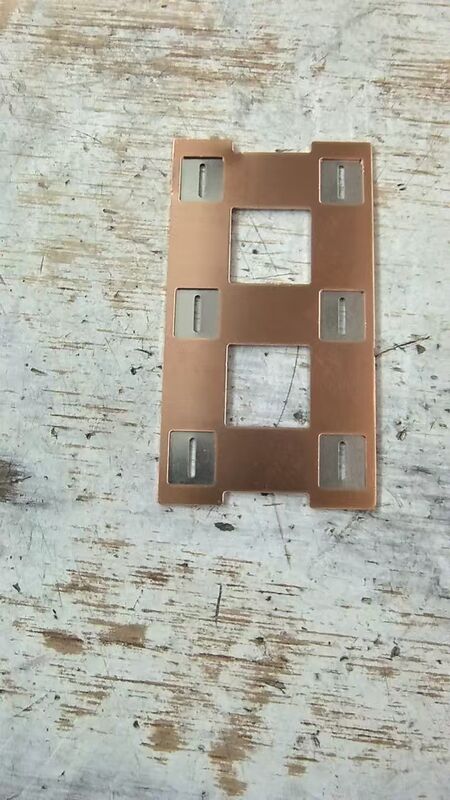
0.05-0.5mm Copper Nickel Composite Strip for Lithium Battery Tabs with High Conductivity and Corrosion Resistance

0.05-0.5mm Copper Nickel Composite Strip for Lithium Battery Tabs with High Conductivity and Corrosion Resistance

ব্র্যান্ড নাম: DLX alloy
মডেল নম্বর: কপার নিকেল কম্পোজিট স্ট্রিপ
MOQ: 10 কেজি
পেমেন্ট শর্তাবলী: এল/সি, ডি/এ, ডি/পি, টি/টি, ওয়েস্টার্ন ইউনিয়ন, ভিটিবি
সরবরাহ ক্ষমতা: প্রতি মাসে 500 টন
বিস্তারিত তথ্য
উৎপত্তি স্থল:
চীন জিয়াংসু
সাক্ষ্যদান:
CE,ISO9001,Rohs
প্যাকেজিং বিবরণ:
শক্ত কাগজের বাক্স সহ স্পুল প্যাকেজ, পলিব্যাগের সাথে কয়েল প্যাকেজ
যোগানের ক্ষমতা:
প্রতি মাসে 500 টন
বিশেষভাবে তুলে ধরা:

0.05-0.5mm Copper Nickel Composite Strip

,

Corrosion Resistant CuNi Alloy Strip

,

High Conductivity Battery Tab Material

পণ্য বিবরণ

In the fast-evolving lithium battery industry, material performance is no longer just a technical parameter—it directly impacts product safety, efficiency, and lifecycle cost. Copper nickel composite strip has become a critical solution for battery tab and connector applications, especially where conductivity, corrosion resistance, and mechanical strength must coexist. From our experience at DLX, this material is increasingly preferred by manufacturers aiming to balance performance with reliability in demanding environments.

Product Overview

Copper nickel composite strip is a layered material combining the high electrical conductivity of copper with the excellent corrosion resistance and mechanical stability of nickel. Typically produced through advanced cladding or bonding processes, the strip maintains strong metallurgical bonding between layers, ensuring consistent performance even under thermal and mechanical stress.

With thickness ranging from 0.05mm to 0.5mm, this material is particularly suitable for precision battery components such as tabs, connectors, and busbars. Its structure allows for optimized current transmission while protecting against oxidation and electrolyte exposure, which are common issues in lithium battery systems.

Material Characteristics

0.05-0.5mm Copper Nickel Composite Strip for Lithium Battery Tabs with High Conductivity and Corrosion Resistance 0

0.05-0.5mm Copper Nickel Composite Strip for Lithium Battery Tabs with High Conductivity and Corrosion Resistance 1

At DLX, we focus on achieving stable composition and uniform bonding. The copper layer provides low resistance pathways for current flow, while the nickel layer acts as a protective barrier against corrosion and enhances weldability.

Key characteristics include:

  • High electrical conductivity
  • Excellent corrosion resistance
  • Strong peel strength between layers
  • Good formability for stamping and bending
  • Stable performance under high temperature conditions
Applications in Lithium Battery Industry

The lithium battery sector demands materials that can handle high current loads, repeated charging cycles, and harsh chemical environments. Copper nickel composite strips are widely used in:

Battery Tabs

These strips are ideal for battery tabs, where low resistance and strong weldability are essential. The nickel surface improves compatibility with welding processes, reducing defects during ultrasonic or laser welding.

Battery Connectors

In connectors, durability and conductivity are both critical. The composite structure ensures stable electrical performance while resisting corrosion caused by electrolytes or environmental exposure.

Energy Storage Systems

For large-scale energy storage systems, reliability over long cycles is crucial. Copper nickel strips help maintain stable connections, reducing maintenance costs and failure risks.

Electric Vehicles (EVs)

In EV battery packs, safety and performance standards are extremely high. The material’s ability to withstand thermal fluctuations and mechanical stress makes it a reliable choice for high-performance battery modules.

Real Problems and Solutions

Problem 1: Oxidation Leading to Poor Conductivity

Pure copper is prone to oxidation, especially in humid or chemically active environments. This increases resistance over time.

Solution

The nickel layer acts as a protective shield, significantly reducing oxidation and maintaining stable conductivity.

Problem 2: Weak Welding Performance

Some materials struggle with consistent welding quality, leading to weak joints and potential failure.

Solution

The nickel surface enhances weldability, ensuring stronger and more reliable joints during production.

Problem 3: Delamination Under Stress

Low-quality composite materials may suffer from layer separation under mechanical or thermal stress.

Solution

DLX uses advanced bonding techniques to ensure high peel strength and long-term structural integrity.

Problem 4: Material Deformation During Processing

Thin materials can deform during stamping or bending, affecting precision.

Solution

Optimized thickness control and material hardness provide excellent formability without compromising strength.

Key Parameter Explanation

Understanding the parameters of copper nickel composite strip is essential for selecting the right material.

Thickness

Ranges from 0.05mm to 0.5mm. Thinner strips are used for compact battery designs, while thicker ones offer higher mechanical strength.

Copper Layer Ratio

Determines conductivity. Higher copper content means lower resistance but less corrosion protection.

Nickel Layer Thickness

Affects corrosion resistance and weldability. A balanced ratio ensures optimal performance.

Tensile Strength

Indicates the material’s ability to withstand mechanical stress. Higher tensile strength is crucial for durability.

Peel Strength

Measures bonding quality between layers. High peel strength ensures no delamination during use.

Electrical Conductivity

Directly impacts battery efficiency. Lower resistance leads to better energy transfer.

Technical Parameter Table
Parameter Typical Value Range Importance
Thickness 0.05–0.5 mm Determines application suitability
Copper Ratio 60–90% Affects conductivity
Nickel Thickness 5–20 μm Impacts corrosion resistance
Tensile Strength 200–400 MPa Mechanical durability
Peel Strength ≥ 30 N/mm Bonding reliability
Electrical Conductivity ≥ 70% IACS Energy efficiency
Surface Finish Bright / Matte Welding and processing quality
Comparison Table (DLX vs General Market Material)
Feature DLX Copper Nickel Strip General Market Material
Bonding Strength High, stable Inconsistent
Surface Uniformity Excellent Variable
Thickness Tolerance Tight control Wider deviation
Corrosion Resistance Strong Moderate
Weldability Optimized Standard
Customization Capability Flexible Limited
Delivery Consistency Reliable Unstable

At DLX, the focus is not just on meeting specifications but ensuring real-world performance. Our production process emphasizes consistency, which is critical for large-scale battery manufacturing.

Industry Trends

The demand for copper nickel composite strips is closely tied to the rapid growth of lithium battery applications. Several trends are shaping the market:

Miniaturization

Battery designs are becoming more compact, requiring thinner and more precise materials.

High Energy Density

As energy density increases, materials must handle higher currents without overheating or degrading.

Automation Compatibility

Manufacturers are moving toward automated production lines, requiring materials with consistent dimensions and properties.

Sustainability

Longer lifecycle and reduced material waste are becoming key priorities, pushing for higher quality composite materials.

Localization and Supply Stability

Global supply chain challenges are driving demand for reliable suppliers with stable production capabilities.

Why DLX Stands Out

From raw material selection to final inspection, DLX maintains strict quality control throughout the entire process. Our copper nickel composite strips are designed to perform consistently across different applications and environments.

We focus on:

  • Stable and repeatable production processes
  • Tight dimensional tolerances
  • Strong R&D support for custom solutions
  • Reliable delivery schedules
  • Practical understanding of battery industry needs

This approach allows us to support customers not just as a supplier, but as a long-term partner in material optimization.

Our 12,000㎡ factory is equipped with complete capabilities for research, production, testing, and packaging. We strictly adhere to ISO 9001 standards in our production processes, with an annual output of 1,200 tons. This ensures that we meet both quantity and quality demands. Furthermore, all products undergo rigorous simulated environment testing including high temperature, high pressure, and corrosion tests before being dispatched, ensuring they meet customer specifications.For all our clients, we offer timely and multilingual after-sales support and technical consulting, helping you resolve any issues swiftly and efficiently.

0.05-0.5mm Copper Nickel Composite Strip for Lithium Battery Tabs with High Conductivity and Corrosion Resistance 2

Client Visits

Building Stronger Partnerships

0.05-0.5mm Copper Nickel Composite Strip for Lithium Battery Tabs with High Conductivity and Corrosion Resistance 3

We support all kinds of testing:

0.05-0.5mm Copper Nickel Composite Strip for Lithium Battery Tabs with High Conductivity and Corrosion Resistance 4

0.05-0.5mm Copper Nickel Composite Strip for Lithium Battery Tabs with High Conductivity and Corrosion Resistance 5

Frequently Asked Questions
  1. What is the main advantage of copper nickel composite strip?
    It combines high conductivity with excellent corrosion resistance, making it ideal for battery applications.
  2. Can the thickness be customized?
    Yes, we can adjust thickness within the 0.05–0.5mm range based on your requirements.
  3. Is it suitable for high-temperature environments?
    Yes, the material maintains stable performance under elevated temperatures.
  4. How is the bonding strength ensured?
    We use advanced cladding processes to achieve high peel strength and prevent delamination.
  5. What surface finishes are available?
    Both bright and matte finishes are available depending on processing needs.
  6. Can it be used for EV battery packs?
    Yes, it is widely used in electric vehicle battery systems due to its reliability.
  7. How does it improve welding performance?
    The nickel layer enhances weldability, resulting in stronger and more consistent joints.
  8. What industries use this material besides batteries?
    It can also be used in electronics, energy storage systems, and precision connectors.

We can provide customized solutions.